
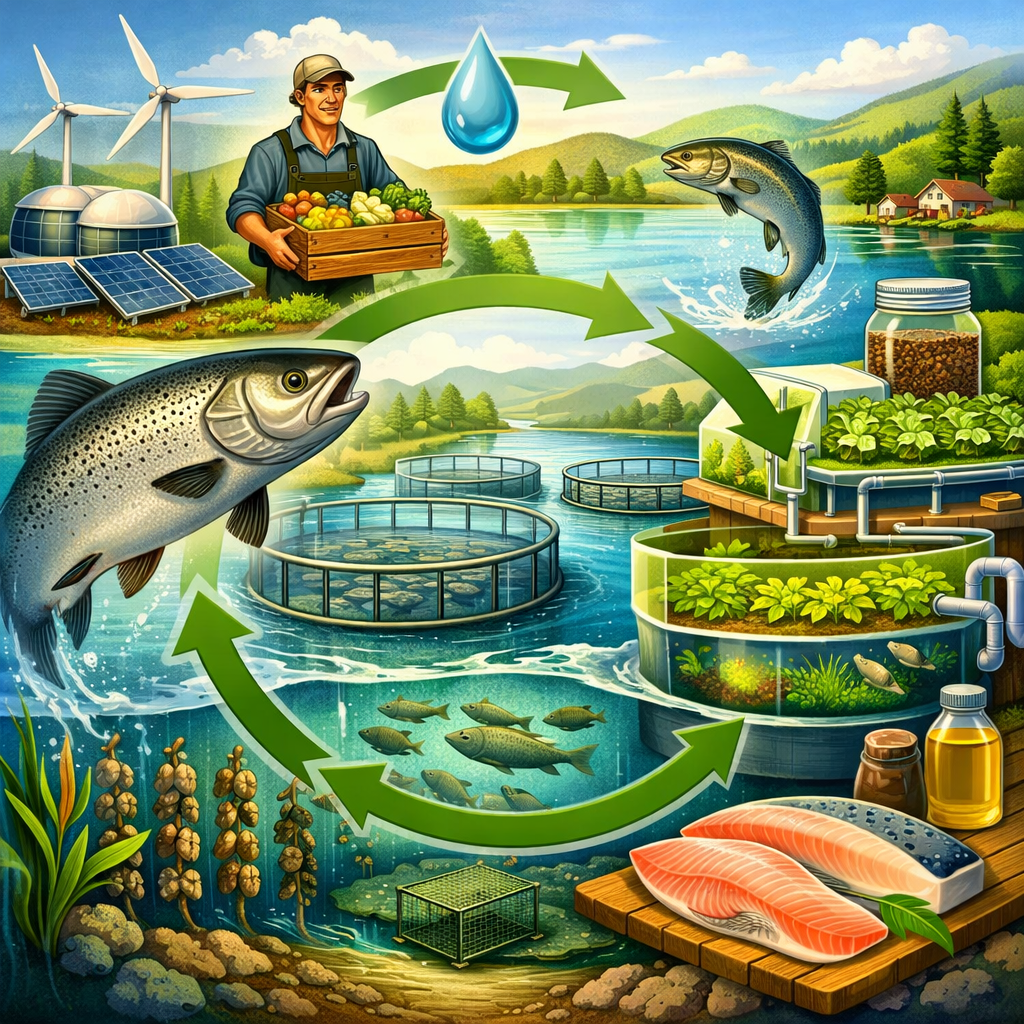
A circular bioeconomy means nutrient rich byproducts from one production process are captured and used as an input to a second production system and so on for more efficient use of nutrients and lower environmental emissions.
Interested in taking part in research?
The SmartAqua4FuturE (SAFE) project (with funding from the European Union and UK Research and Innovation) is researching potential circular economy approaches to reducing the environmental impact of freshwater aquaculture. As part of the research, we are organising a series of focus groups during August-October 2026 to gain deeper insights into consumers’ decision-making around seafood purchases.
We are looking for consumers who at least occasionally purchase and consume fish who would be willing to take part in an online focus group lasting 60-90 minutes to discuss what encourages or discourages your fish consumption, your perceptions of aquaculture (fish farming) and how this and other factors affect your purchasing behaviour.
Participants should be adults (18+) who directly purchase fish in shops, restaurants or take-aways but who do not have any professional connection with the seafood industry, or educational qualifications directly related to aquaculture or fisheries, or are members of any organisations campaigning on seafood related issues. The focus groups will be held in English and you will need a computer, tablet or mobile phone with camera that is compatible with Microsoft Teams (App or Web version).
Separate focus groups are being held for residents of UK, Ireland, Finland, Poland and Portugal. Each focus group will involve around 4-8 people who are broadly similar with respect to age group, living environment and educational background. All data collected will be anonymised and any personal data collected will be held securely under GDPR for the minimum time necessary to manage the research process.
In order to comply with funder rules and avoid any perceptions of bias there will be no payment for taking part in this project. However, participants will be contributing to research that will help guide both the industry and government policy across Europe.

Note: The ethical approaches of this project have been approved through the University of Stirling General University Ethics Panel. Ethics Approval Reference: GUEP 2026 13885 21709. This research is being led by Dr Richard Newton, Lecturer in Resilient Food Systems (richard.newton@stir.ac.uk) and Mr John Bostock, Researcher, (j.c.bostock@stir.ac.uk) both at the University of Stirling. Collaborating organisations are: University of Galway (Ireland), The Finnish Environment Institute (SYKE) and The The West Pomeranian University of Technology in Szczecin (Poland).