
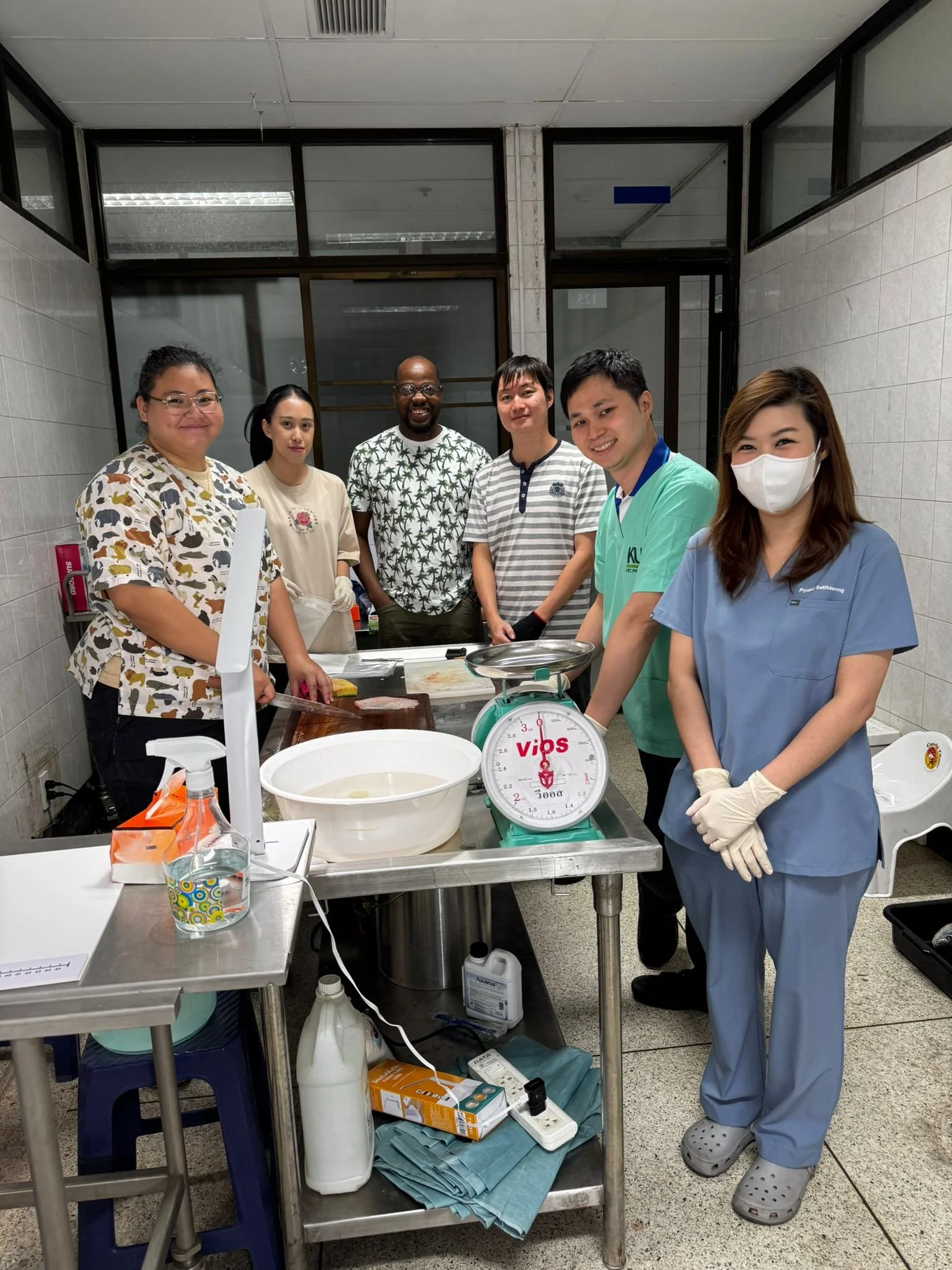
The team at Kasetsart University have now published the findings from their research on tilapia stunning methods. The headline finding is that the way fish are stunned and slaughtered is not just an ethical issue, but also directly affects stress levels and consequently rigor mortis and the quality of the meat for consumers.
The study tested six common stunning methods to see which provided both better welfare and product quality. These were:
Priest stunning
Bolt pistol
Ikijime
Live freezing
Anaesthetic overdose
Asphyxiation
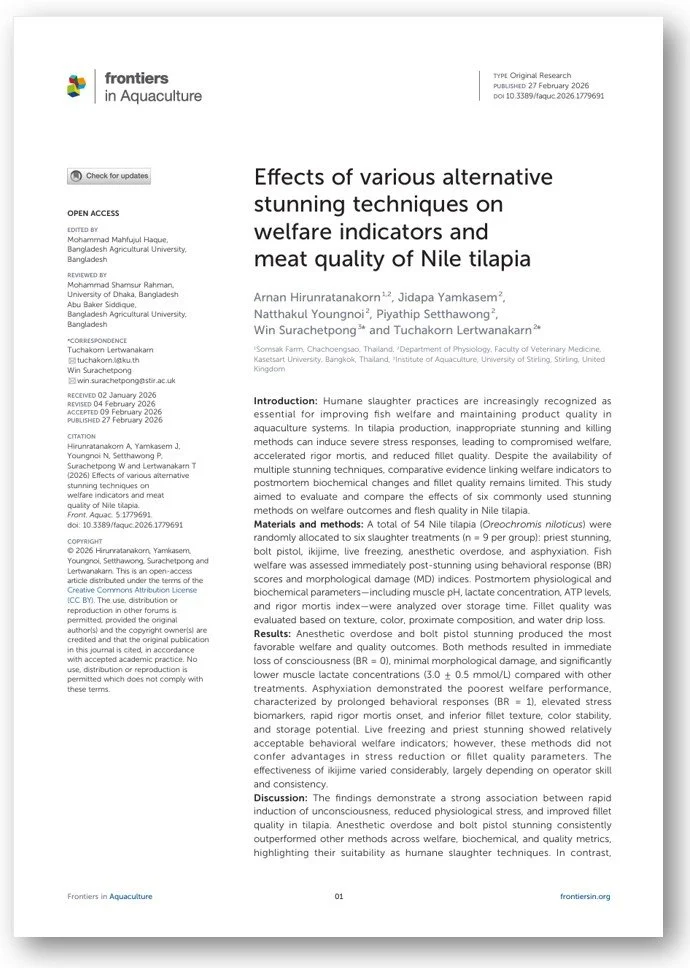
The published paper in Frontiers in Aquaculture
Welfare was assessed using behavioural responses, physical damage and tracked postmortem biochemical changes such as muscle pH and lactate concentration. Meat quality was assessed using texture, colour, composition and drip loss over suitable time intervals.
The team found two methods to be superior to the rest: Anaesthetic overdose and Bolt pistol stunning. Both produced:
Instant unconsciousness
Minimal physical damage
Much lower stress indicators (including significantly reduced muscle lactate)
Better fillet texture, colour stability and shelf-life
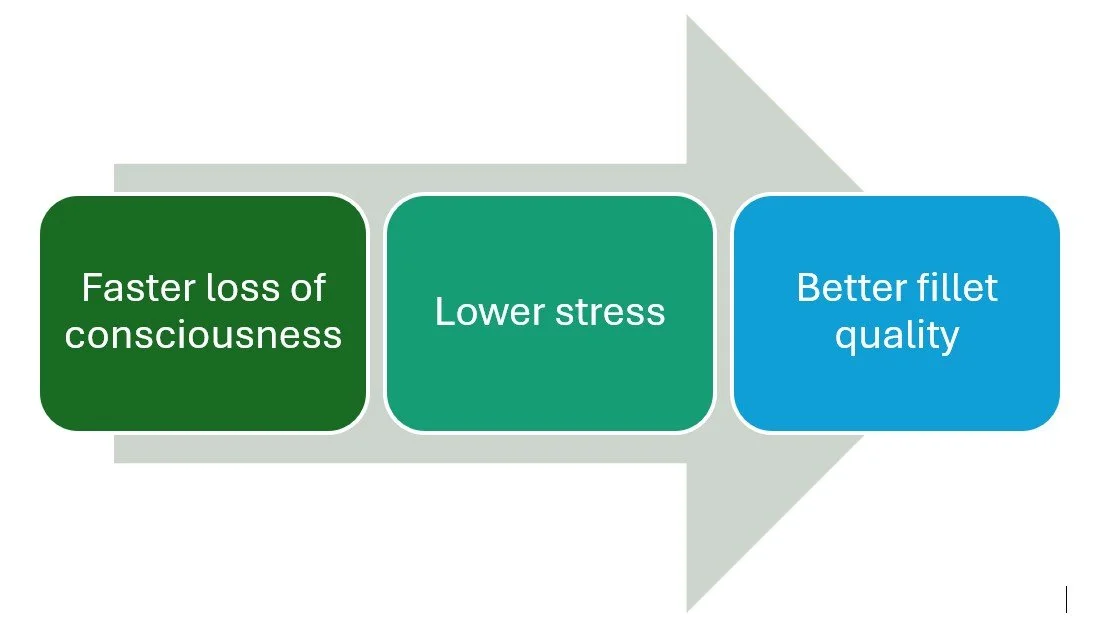
At the other end of the spectrum, asphyxiation performed worst causing prolonged distress, high stress biomarkers, rapid rigor mortis and noticeably poorer fillet quality. Live freezing and priest stunning looked acceptable behaviourally, but didn’t actually reduce physiological stress or improve flesh quality. Ikijime showed potential, but depended heavily on operator skill. The study confirmed the simple but powerful link:
The authors concluded that anaesthetic overdose was not feasible in the context of consumer markets and that a bolt pistol offers the greatest potential for improvements.
You can access the full publication here: Hirunratanakorn, A., Yamkasem, J., Youngnoi, N., Setthawong, P., Surachetpong, W., & Lertwanakarn, T. (2026). Effects of various alternative stunning techniques on welfare indicators and meat quality of Nile tilapia. Frontiers in Aquaculture, 5. https://doi.org/10.3389/faquc.2026.1779691
Previous blog articles about the project:
Report on initial experimental trials 15/02/2025