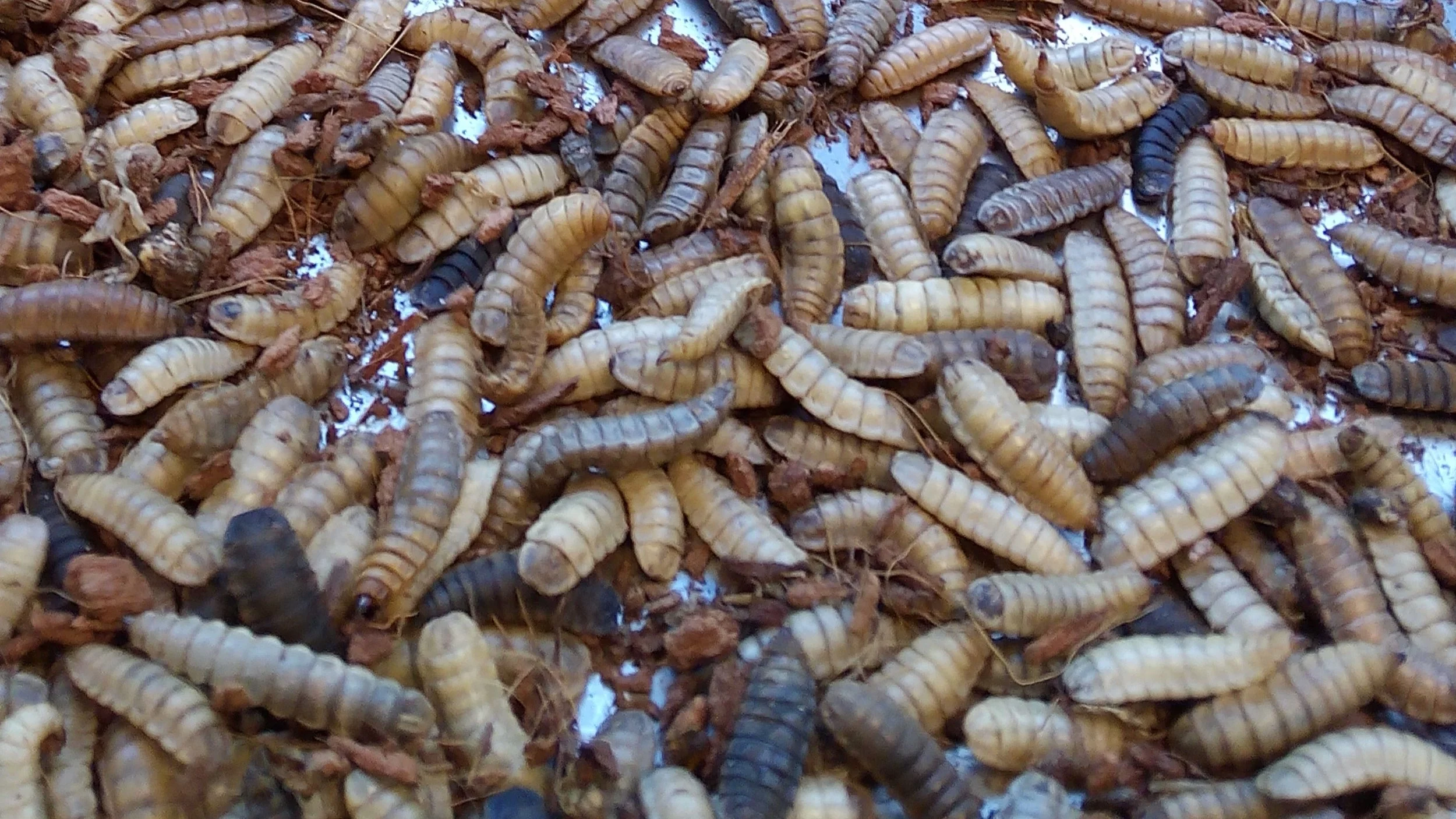
From RAD Global:
Is it possible to produce affordable tilapia in Sub-Saharan Africa using Black Soldier Fly Larvae (BSFL) to partially replace conventional feed?

This is one of the questions on the minds of those working to make fish farming more profitable for farmers — while also making fish consumption more affordable for communities. Rural Aquaculture Development Global, alongside ThinkAqua and the University of Stirling, have been working to try and answer exactly this question.
ThinkAqua and the University of Stirling worked with RAD Global to conduct trials at their hub in Rukungiri, Uganda (Funded by Innovate UK Business Connect). Over 105 days, RAD Global tested different levels of BSFL and conventional pellet feed, before assessing the impact on fish growth, feed cost and the overall economics of the system.
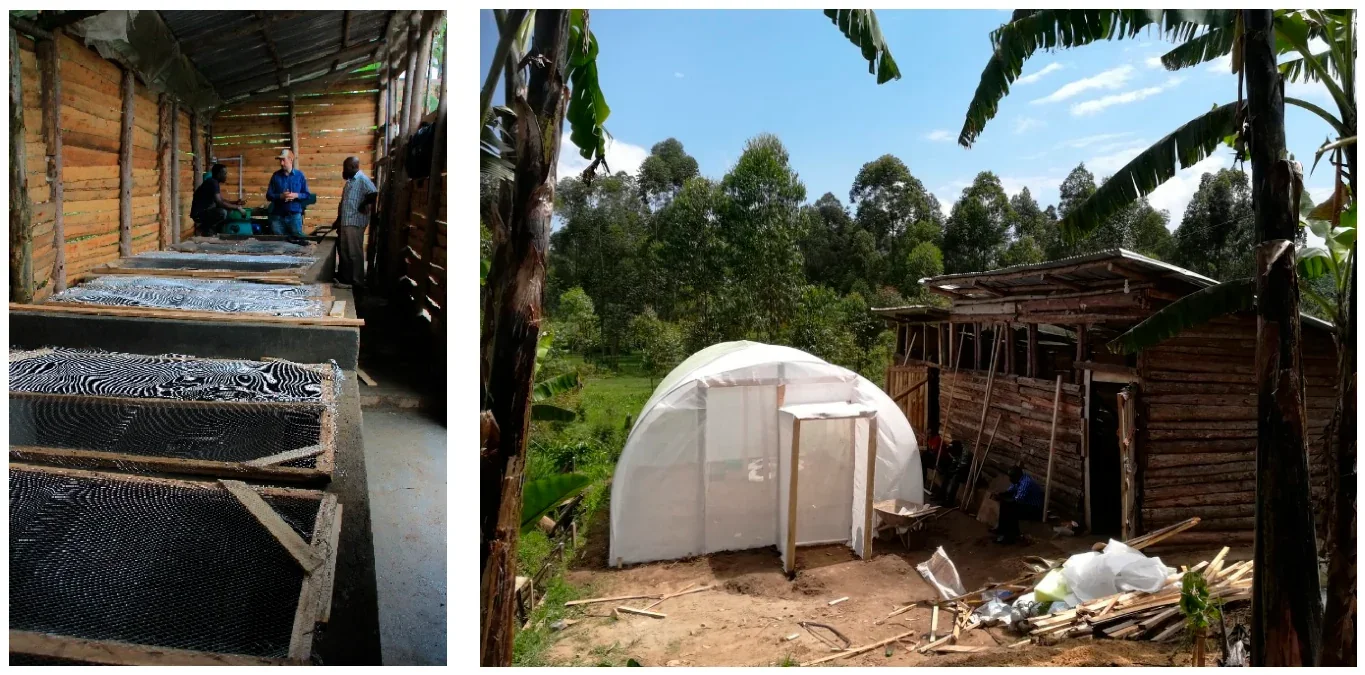
Black soldier fly production facilities at the RAD farm
The results were encouraging:
🐟️ Up to 66% of conventional feed could be substituted with BSFL without negatively affecting fish health.
🌱 Profitability improved with lower feed costs (60% cost savings from pellets) with revenue from frass and leftover BSFL.
♻️ BSFL grown on locally available, low-cost waste materials could provide a more sustainable approach to reducing feed costs and supporting food security.
The potential is exciting. By introducing farm-grown BSFL to partially substitute conventional feed, we could help make growing, harvesting and selling tilapia more affordable for farmers — while also helping make nutritious fish more accessible to consumers.
For some of the poorest communities in the world, finding ways to produce more affordable, nutritious food using locally available resources could play an important role in improving food security. There’s still plenty more to learn, but these findings are a promising step forward.
You can read the full published article here: https://doi.org/10.3390/su18199745
Read our original blog post about setting up the BSF production facility here: https://www.susaquastirling.net/blog/2022/12/5/supporting-insect-larvae-production-in-uganda
Further information and comment:

“Producing BSF for aquaculture feed has been discussed and often dismissed for more than a decade now. The research were talking about here is different because it is feeding whole BSF larvae as a supplementary feed to tilapia grown at low density in green water ponds. We’re not suggesting that all farmers should be producing BSFL themselves (thats a business for Rural Aquaculture Development Global hubs), but demonstrating that it can really help the commercial profitability of these smallholders, while also making use of local food waste streams and producing valuable local fertiliser to support the wider agrifood system.”

Fish remains unaffordable for communities in many parts of Sub-Saharan Africa where malnutrition is common. High aquaculture production costs due to feed and labour prevent the production of affordable fish. Substitution of commercial with farm-made feed can lower production costs. In this study, on a small-scale Ugandan tilapia farm, commercial feed was substituted with black soldier fly larvae (BSFL), grown using fruit and vegetable waste. Data on the cost of establishing larvae production facilities, operating costs and fish production were used to test the economic feasibility of substituting feed with BSFL to produce affordable tilapia.
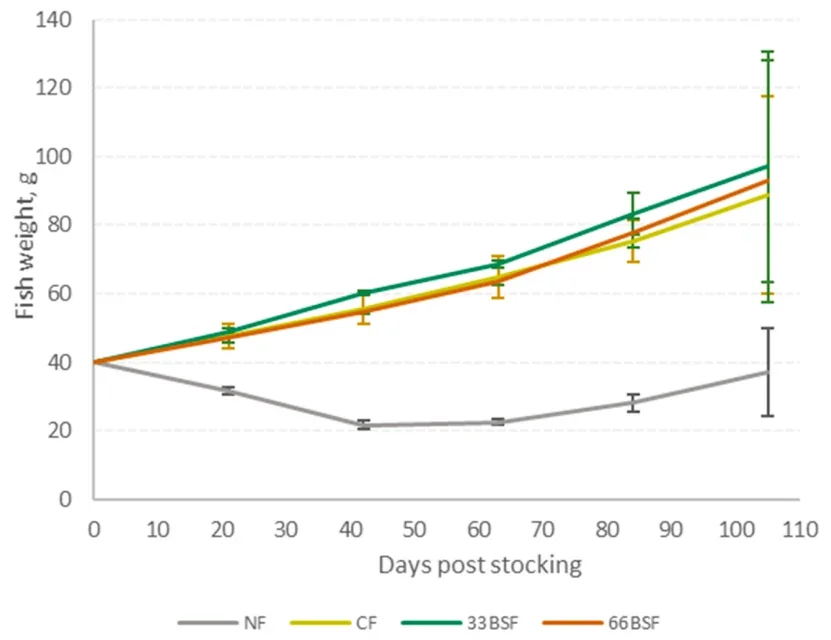
Growth of tilapia produced using four different feeding regimes over 105 days
We found that feed could successfully be substituted with up to 66% BSFL with no effect on fish production. Economic analysis revealed that 55% substitution was needed to produce tilapia at US$2.00/kg with a Feed Conversion Ratio of 2.4. Profitability improves if fish sales are supplemented with sales of frass (used substrate) and any leftover BSFL. Substitution of feed with BSFL grown on local low-cost waste materials provides a sustainable and circular approach to tackling food security in some of the world’s poorest communities”
Full published article here: https://doi.org/10.3390/su18199745
Banner photo credit: Adapted from ShaunRomero, CC BY-SA 4.0, via Wikimedia Commons
