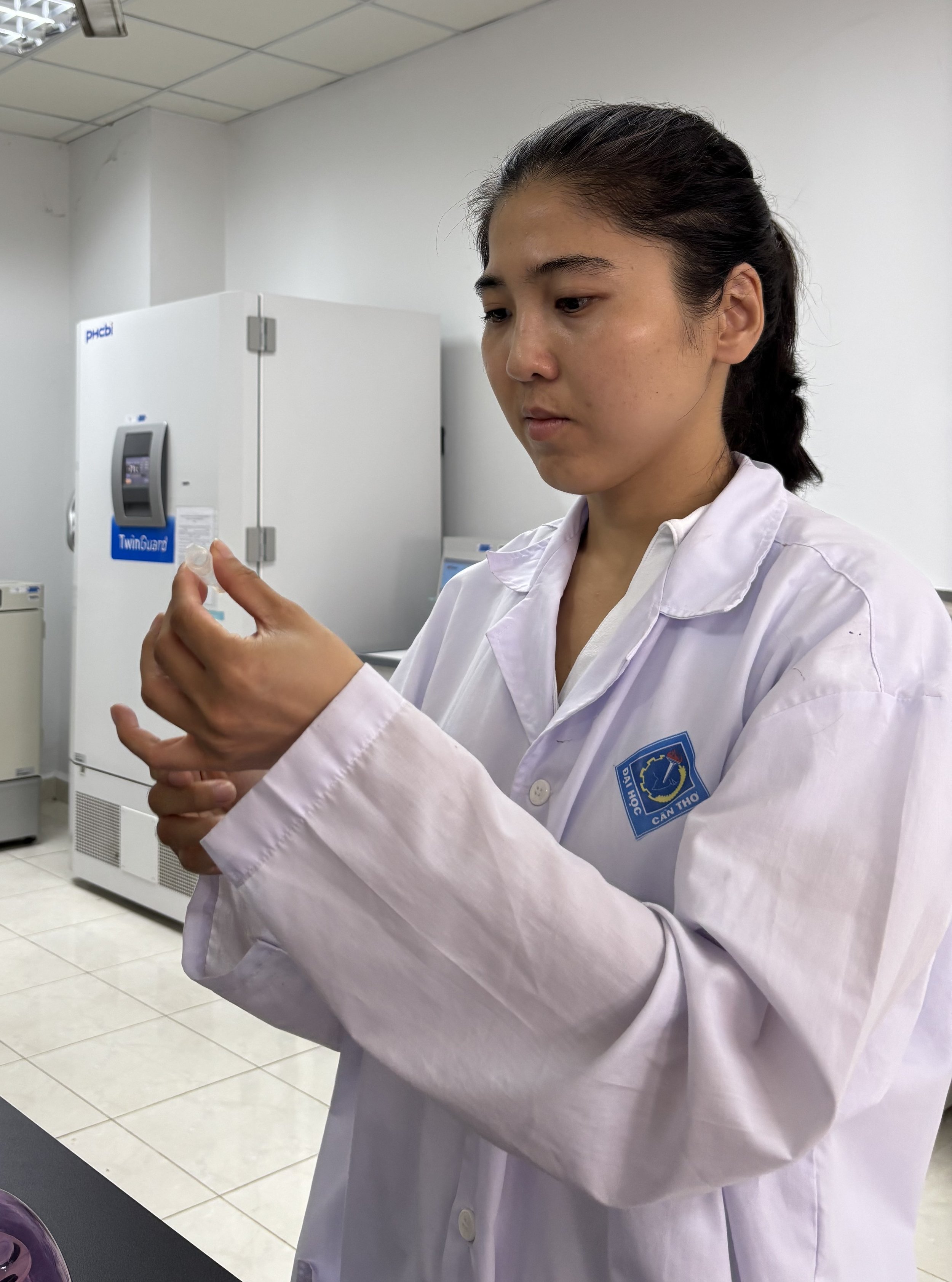
Hi everyone! I am Thanh, an MSc student in Sustainable Aquaculture at the University of Stirling. After completing my autumn and spring semesters in Scotland, I have returned to Vietnam for the summer to conduct my final dissertation project, “An assessment of stress in Tilapia throughout the Vietnamese value chain”
The project explores how stress and welfare change as tilapia move through different stages of production, from nurseries and farms to transport and live fish markets in southern Vietnam. Although tilapia are widely recognised as a hardy species, they can still experience stress during routine farming and handling practices. Understanding when and where this stress occurs is important because it can affect fish health, welfare, product quality, and ultimately the sustainability of aquaculture production.
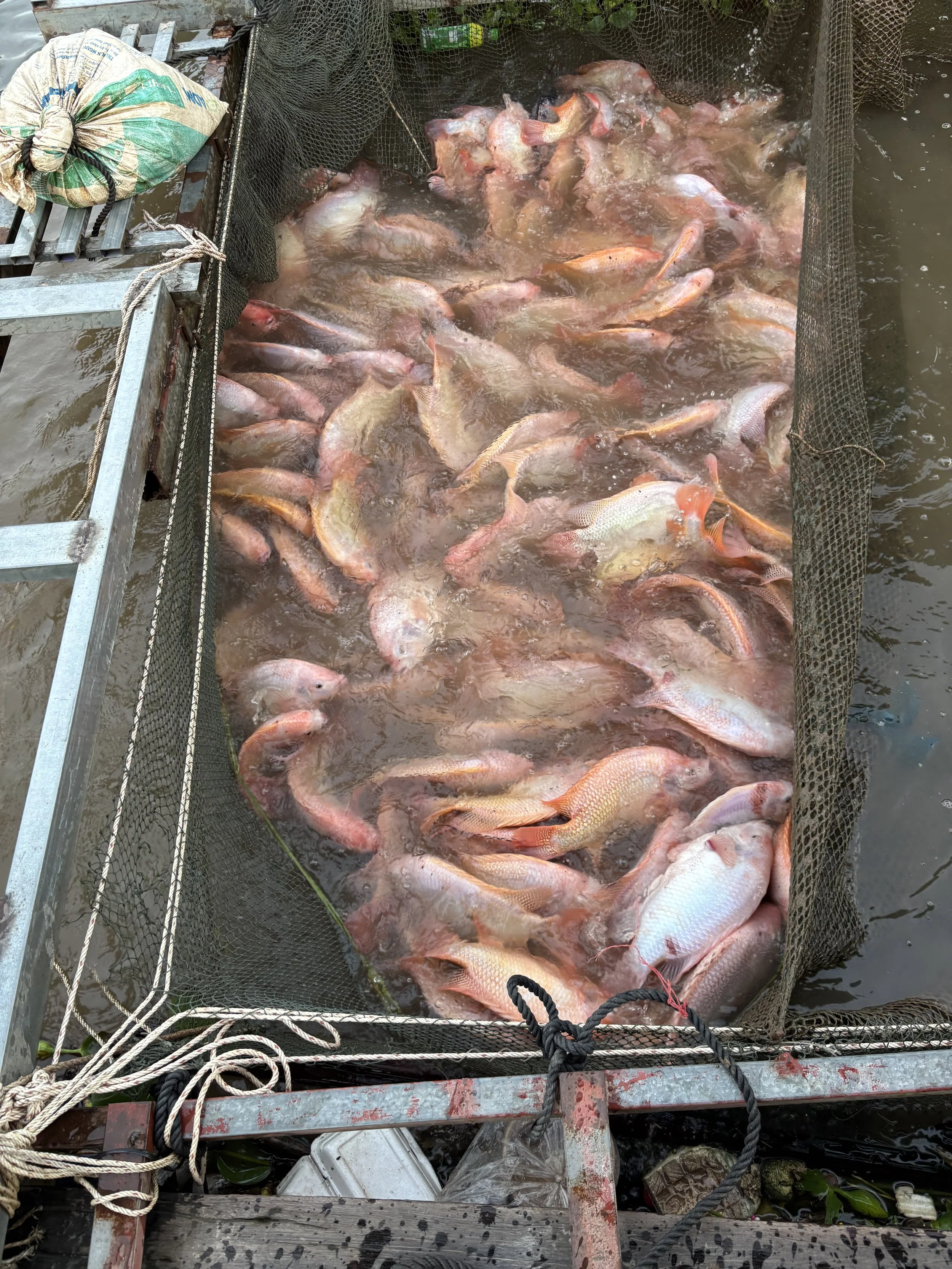
Harvesting red tilapia
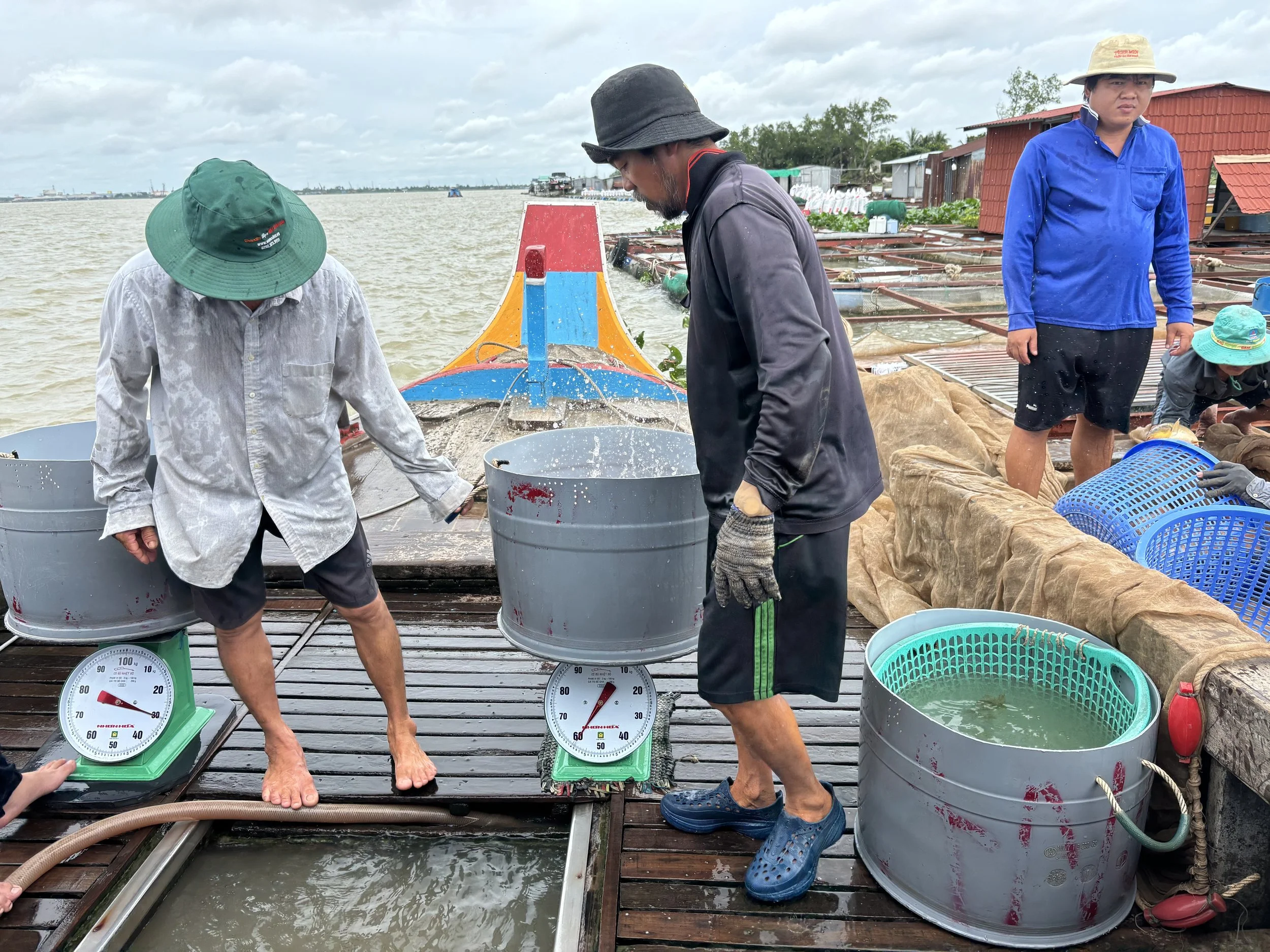
Our fieldwork is being conducted in collaboration with Can Tho University, where we track fish across three real-world operational stages: the initial transfer from nurseries to grow-out farms, the harvest and transport from floating cages to local markets, and the final display holding systems within live fish retail markets. One of the main goals of my research is to identify the points along the value chain where fish experience the greatest stress and understand the factors contributing to it. At the same time, the project is investigating the potential of using skin mucus as a simple, non-invasive way to assess stress in live fish. Instead of relying on blood samples, which can themselves cause stress, skin mucus may provide a practical alternative for monitoring fish welfare in commercial farming systems.
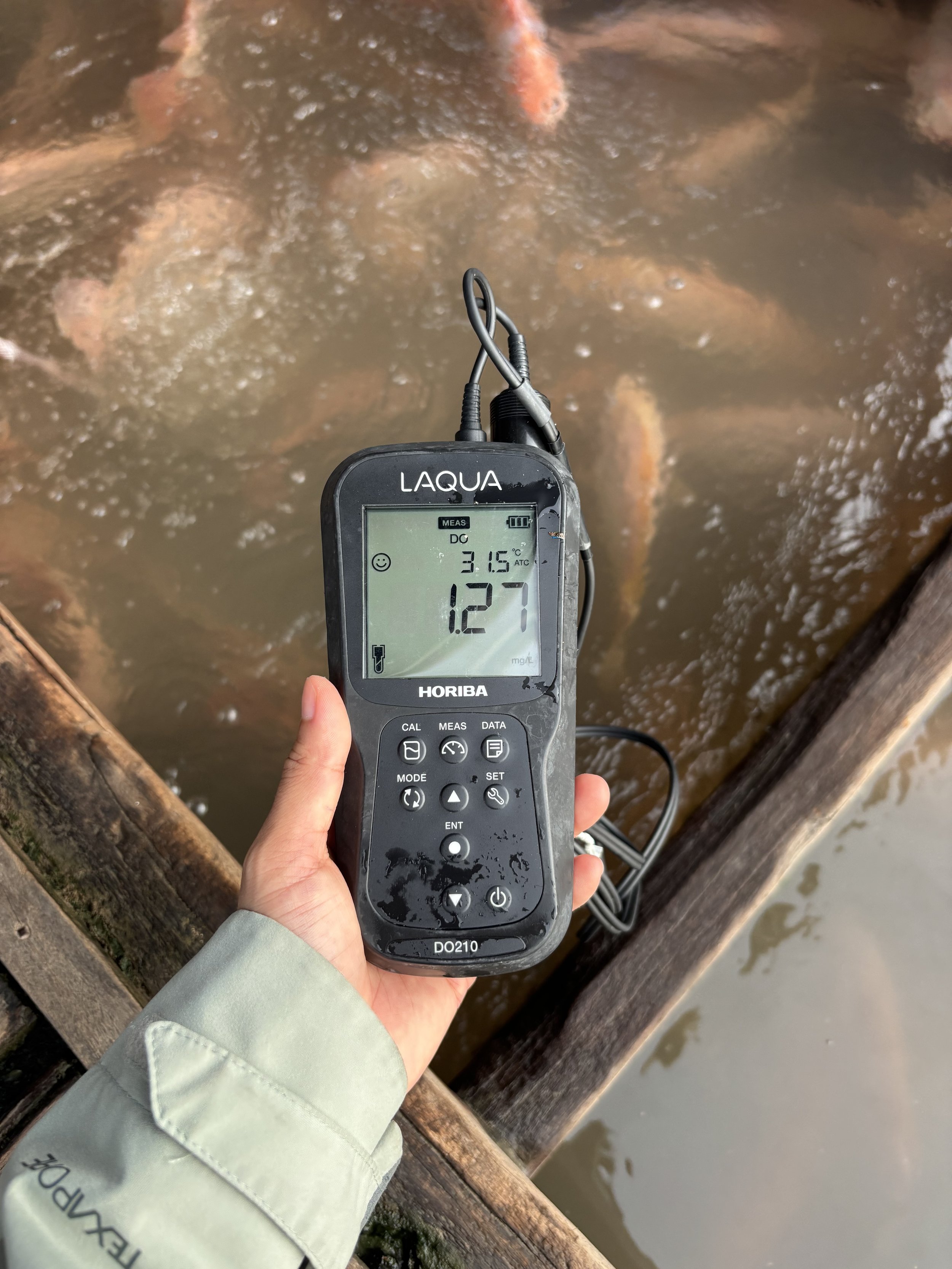
Measuring dissolved oxygen
To build a holistic and scientifically rigorous profile of fish well-being, the project integrates this biological data into a comprehensive welfare assessment framework. In the laboratory, the mucus samples are analyzed using specialized assays to map the primary stress hormones and energy metabolites. We then combine these biochemical findings with on-site environmental monitoring of crucial water quality parameters like dissolved oxygen, temperature, ammonia, and nitrite levels. Furthermore, we capture high-resolution photographs of every fish to perform visual health scoring, focusing heavily on external signs of trauma such as skin lesions and fin erosion. Finally, we conduct conversational interviews with local farmers and market operators to gather vital background context on daily stocking densities, transport durations, and feeding regimes.
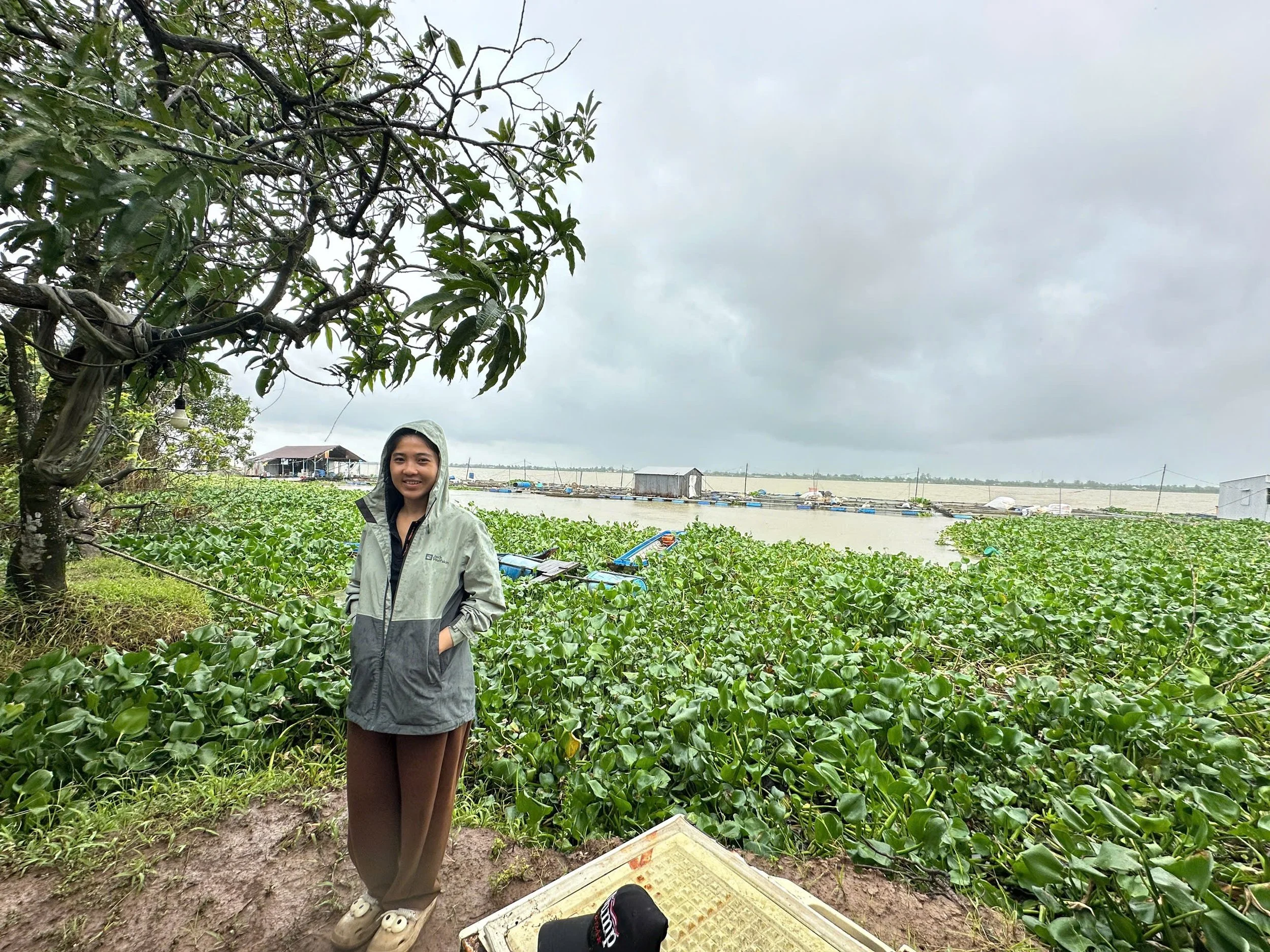
Thanh Le at one of the tilapia farm sites
By identifying where stress levels are highest, I hope this research will provide practical recommendations to improve fish welfare while supporting sustainable aquaculture production. In the longer term, the findings may contribute to the development of science-based welfare guidelines and certification standards for tilapia farming in Vietnam and across Asia.