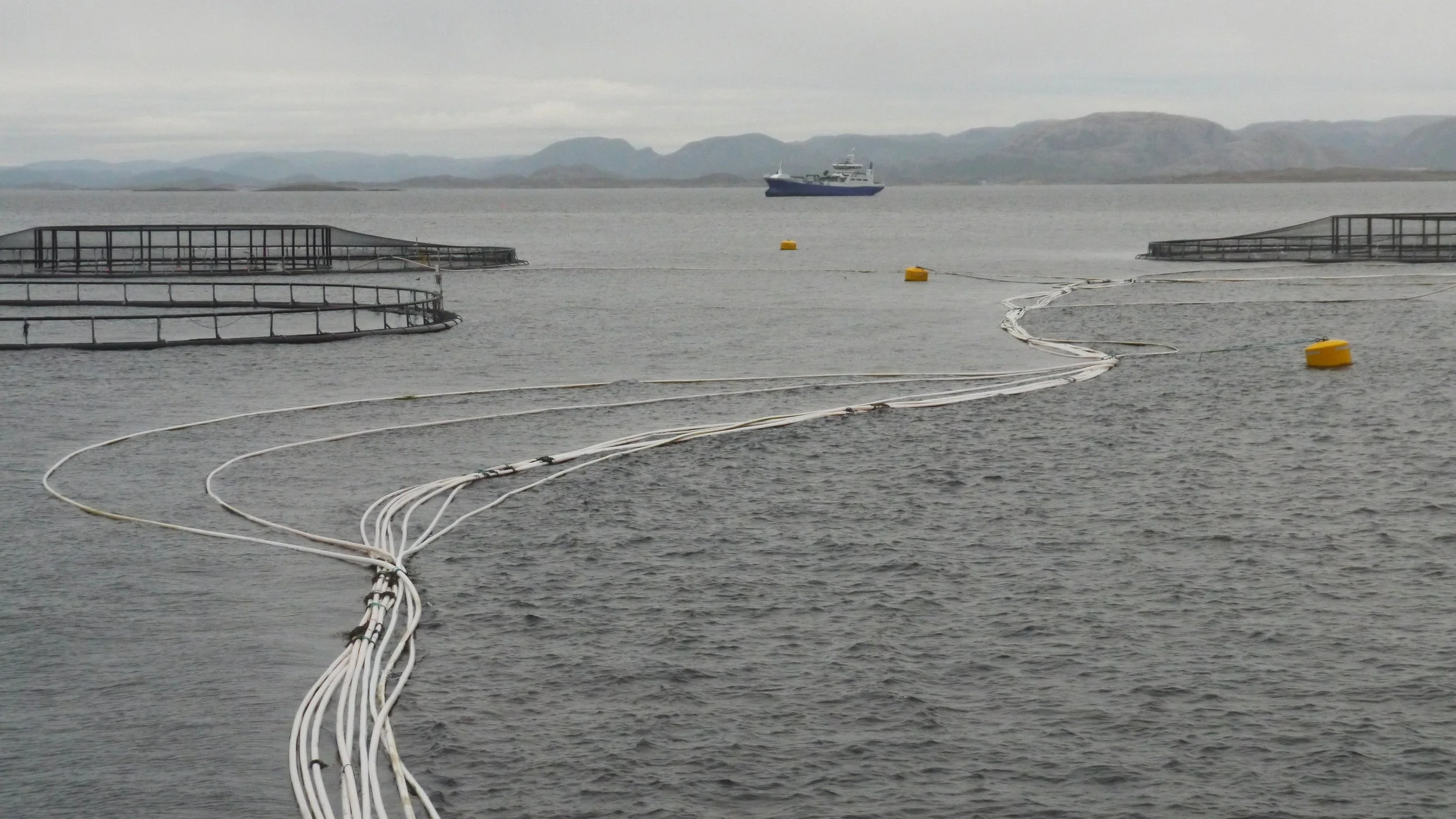


In a new study led by Björn Kok and Dr Wesley Malcorps, the impact on environmental footprint of changes in diet composition of European aquaculture species was investigated between 2000 and 2020. Over this period there was a dramatic reduction in the inclusion of marine ingredients and a corresponding increase in the use of terrestrial ingredients, especially plant-based.
Over the twenty years investigated, the sector almost doubled its output, mainly due to the expansion of salmon farming, particularly in Norway. However, the quantity of marine ingredients used fell by 13%. This is widely regarded as a major achievement, given concerns about potential over-fishing and pressures on marine resources. However, the study illustrates that such changes come with trade-offs and that use of several metrics is needed to get a more nuanced understanding of environmental effects. For instance, over the same period and at the industry level, greenhouse gas emissions attributable to the sector increase by 314%, land use (e.g. for feed crop cultivation) by 594% and water consumption by 236%. Marine and freshwater eutrophication also showed a significant rise of 630% and 468% respectively. Much of the change is driven by increased use of soybean proteins and rapeseed oil. The chart below shows the relative change in environmental impacts per kg of fish produced, with average global warming for instance increasing from 1.24 to 2.55 CO2eq/kg, and land use from 1.04 to 4.55 m2 crop eq/kg of fish produced.
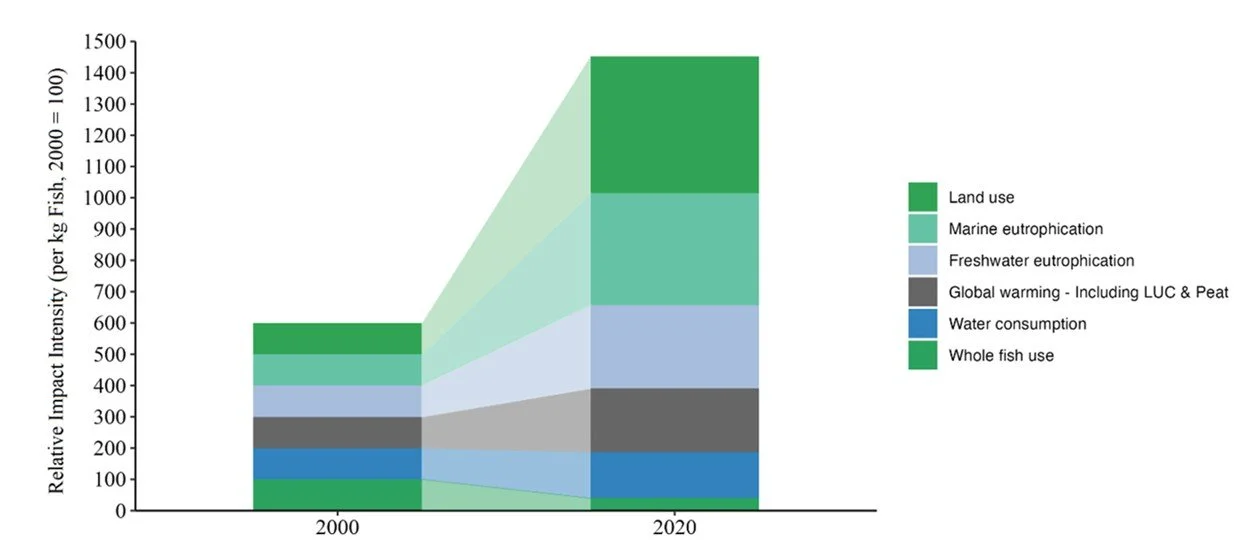
Changes in average environmental impact for feed for European aquaculture species per kg fish produced.
The study used index decomposition analysis to separate the effect of different drivers such as sector growth and efficiency gains to the impact of individual ingredients within specific sub-sectors. By isolating the contributions of production growth, efficiency improvements and changes in feed ingredients the team hope to lay the foundations for more informed and sustainable decision making across the aquaculture industry.
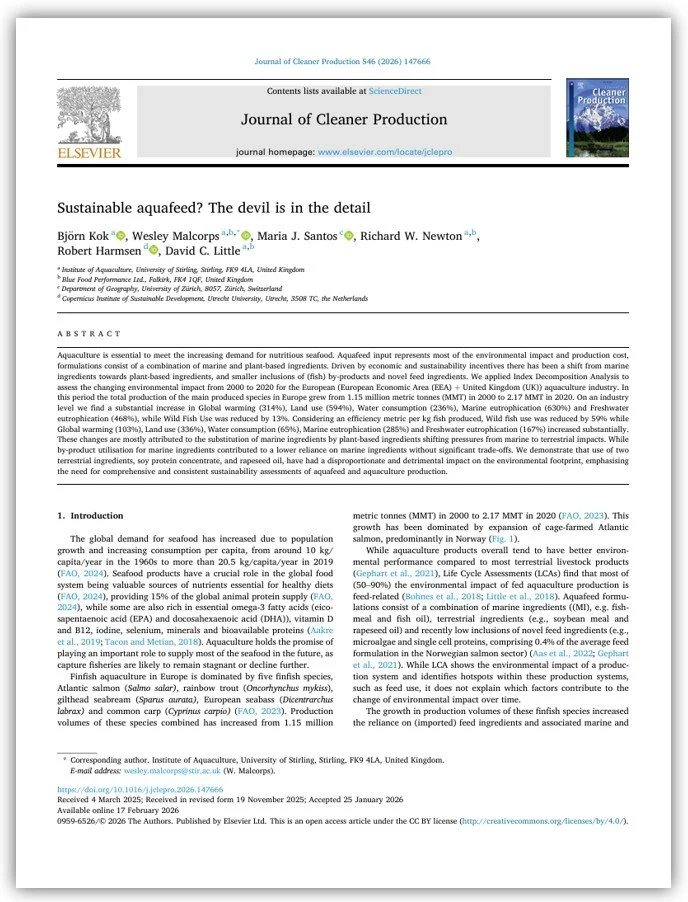
Note: This article is based on a News Release by the University of Stirling. The original paper (Sustainable aquafeed? The devil is in the detail) is available from Elsevier - Journal of Cleaner Production